Across Time And Across far-Flung Cultures, Ancient Artists Keep Depicting the Same Dragon/Sauropod with Similar Morphological Characteristics
by Chris Parker
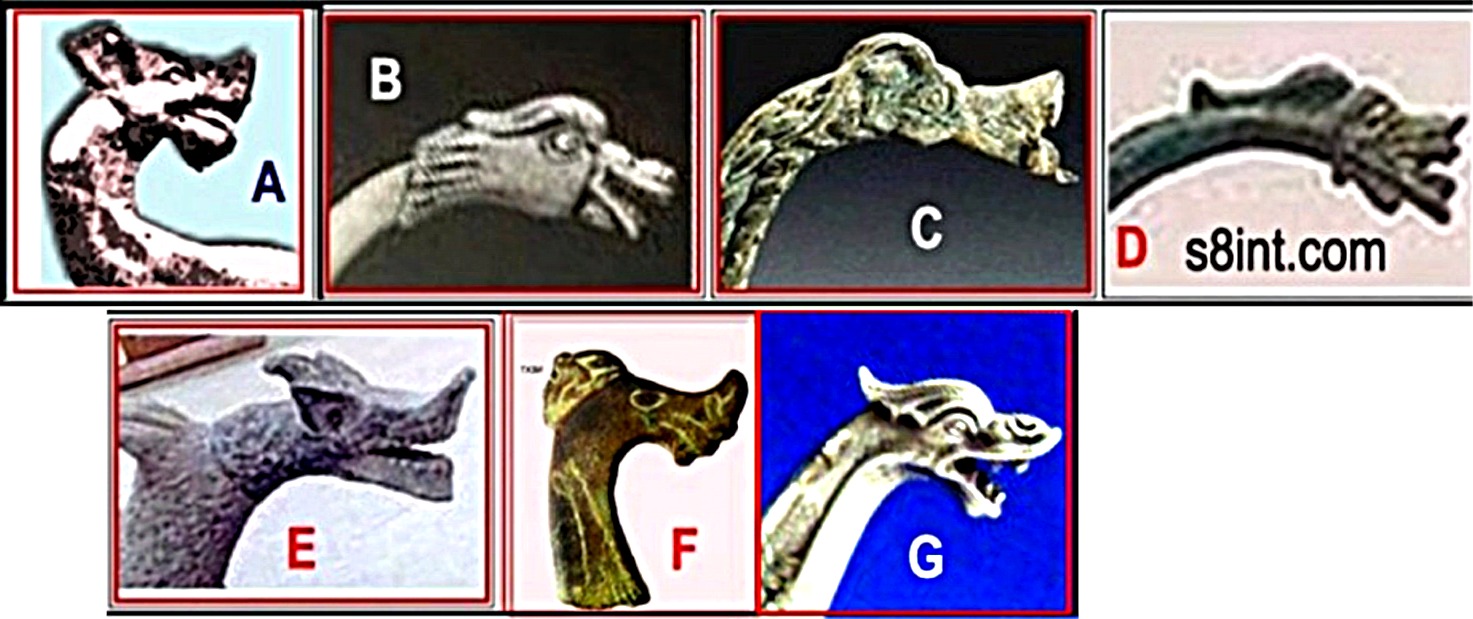
Science says that dinosaurs and man missed each other by 65 million years. The Bible, and ancient depictions in art disagree. Its been said that nearly every ancient culture had dragons in their individual histories-as well as memories and stories about a great flood-but what wasn't clear was that it was often enough, the same dragon. What culture is not going to take note of giant sauropod dinosaurs, if they were still around?
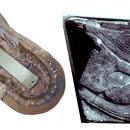
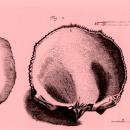
From left to Right:(A)This is another version of the Mesopotamian cylinder seal (colorized). 3,300 B.C. Currently housed at Louvre Museum.
(B) Coffee Pot. By: Unidentified artist, Portuguese (Lisbon)
19th century, about 1825-1850 Metal; silver, wooden handle 29.5 x 26.7
Curved steamed body, 4-sided, heavy moulding below long contracted neck. Flattened domed cover. On 4 claw-ball feet. Curved spout flat at back, with animal’s head tip. Angular wooden handle. Cast parrot on ball, finial screwed to cover. Bands of floral repousse at base, above and below mid-moulding, at neck and on cover.
Museum of Fine Arts, Boston
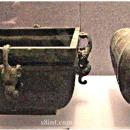
(C)From the Vietnamese Bronze Age: 3rd century A.D. Cast bronze. Museum of Fine Arts, Boston. Dongson culture.
(D)Bronze Ladle with “dragon head” handle. Han dynasty(220 B.C. to approx 220 A.D… Chinaweb
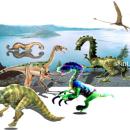
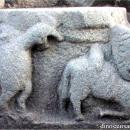
(E)Acambaro Mexico. Carbon dated to 1,500 to 4,000 years old. http://www.omniology.com/ManyDinos.jpg
(F)Record ID: HAMP-9A5B16
Object type: BRIDLE FITTING
Broad period: EARLY MEDIEVAL
County: HAMPSHIRE
Workflow stage: Awaiting validation
A slightly corroded fragment from a late early-medieval/Anglo-Scandinavian cast copper-alloy cheekpiece (c. 11th century AD). The fragment is formed of a curved Ringerike style animal head and neck in profile, possibly a dragon or sea monster. The cheekpiece is flat and the neck is long and the head is set at roughly right angles to it. On the outer edge of the curve is a recessed protrusion, broadly semicircular with a small central knop and suggestions of losses behind. At the end of the head is a recurving hook, perhaps representing a horn. Below are three small lobed protrusions …
The piece (F) on the far right is Scandavavian, from the 11th century A.D. The piece on the far left (A) is from 3300 B.C.-and yet from left to right the open minded can see that it is always the same creature that is being depicted; long necked, fleshy nosed and often bearded.
(G) 1892 Norwegian Tea Set. (Described above)
A word about the noses. It seems that the noses portrayed here for diplodocus are “fleshy” when compared with modern depictions. Here is a idea why the ancient depictions could be more accurate.
**FAIR USE**
Copyright Disclaimer under section 107 of the Copyright Act 1976, allowance is made for “fair use” for purposes such as criticism, comment, news reporting, teaching, scholarship, education and research.
Fair use is a use permitted by copyright statute that might otherwise be infringing. Non-profit, educational or personal use tips the balance in favor of fair use.
Please Support the Research of S8int.com!
Support S8int.com with a PayPal Donation!
More Posts About Featured