The Viking Pendant That Looks Too Much Like a Sauropod Dinosaur
Why Human Racial Memory is Not Actually a Thing
Chris P
May 26, 2026
By Chris Parker
“Come now, and let us reason together,” Says the Lord,” Isaiah 1:18
Dragons; sometimes huge, reptilian, dangerous, sometimes winged, sometimes not, creatures – are reported not as mythological but as real in every ancient culture on every continent. Of course, those creatures that we now call dinosaurs were also sometimes huge, dangerous, sometimes winged, sometimes not, creatures – that lived on every continent. (Technically pterosaurs are not considered dinosaurs).
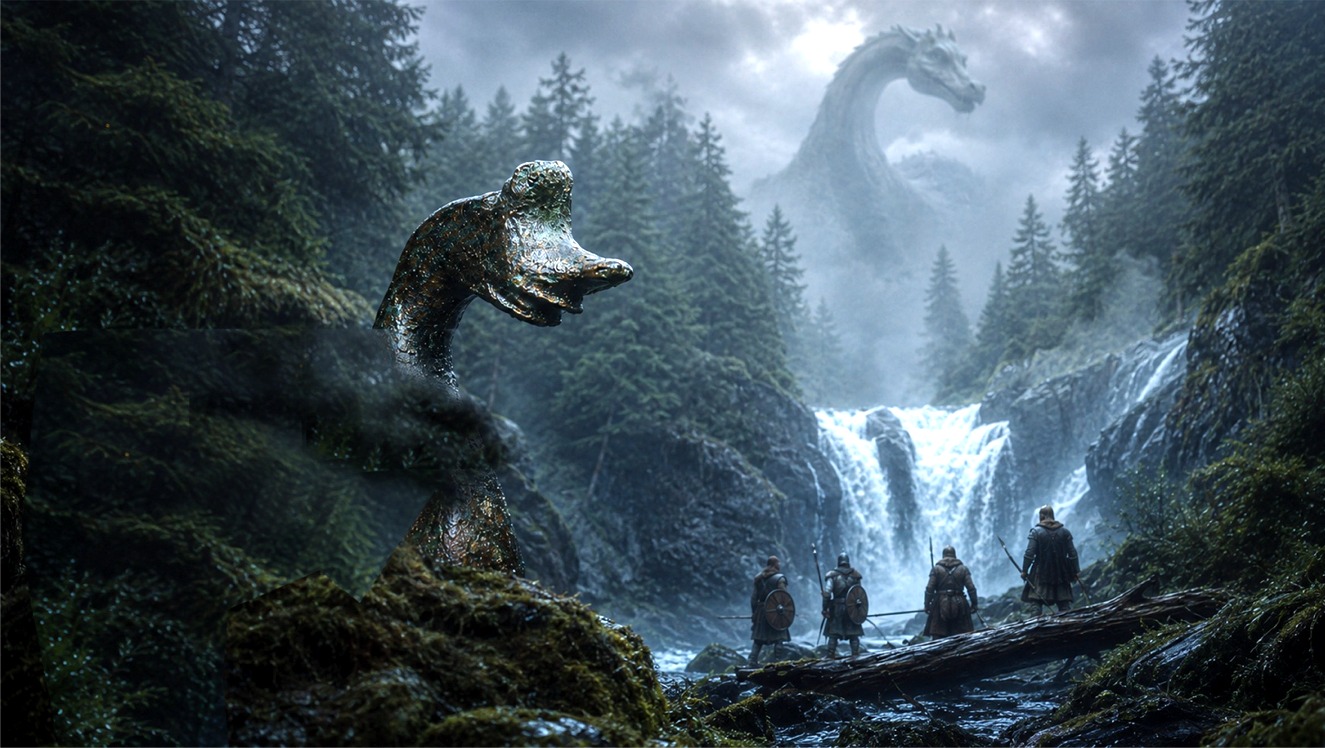
Among those ancient cultures who described living dragons were the Norse and that subset of the Norse culture the Vikings.
Some artifacts are interesting because of what they are. Others are interesting because of what they are not supposed to be.
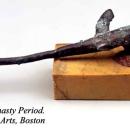
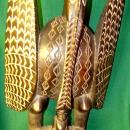
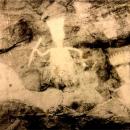
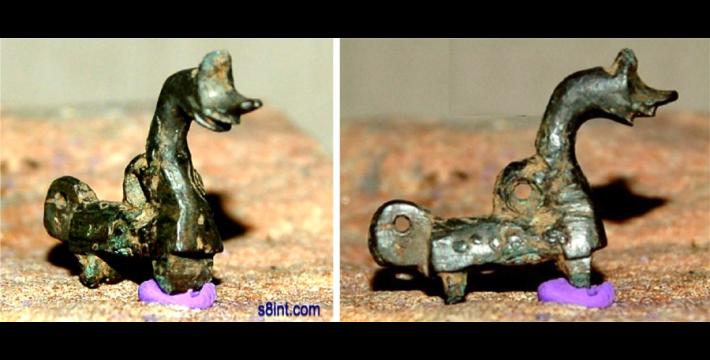
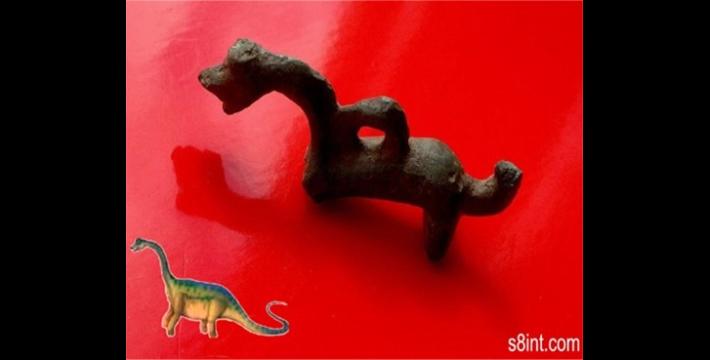
A small bronze Viking pendant offered for sale online back in 2012 falls into the second category. At first glance, it is merely another piece of ancient zoomorphic jewelry — a stylized animal pendant, perhaps meant to be worn as an ornament or charm. (The pendant is the “dinosaur” cleverly placed in the image above.)
The seller described it as an “ancient Viking bronze zoomorphic pendant.” It was said to have been found in Latvia and to date from roughly 900–1000 A.D., placing it within the broad Viking world of northern and eastern Europe.
The object is only a few inches long. It is not monumental. It is not carved into a temple wall or painted onto the ceiling of a tomb. It is a little bronze creature, small enough to be worn on the body.
But the problem is its shape.
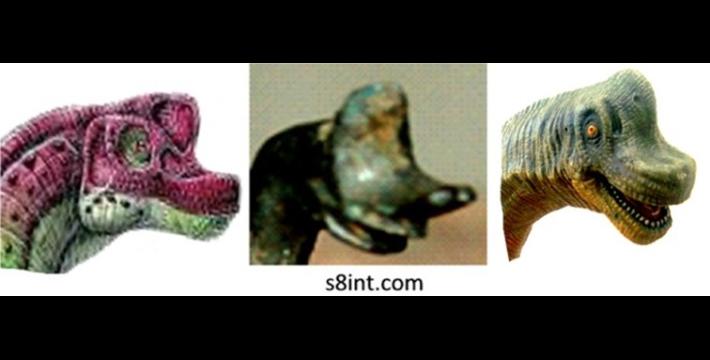
The pendant does not look much like a horse, wolf, bear, bird, serpent, or any of the familiar animals that usually populate Norse or medieval art. It has a long neck, a long tail, a relatively small head, and a body form that immediately brings to mind a sauropod dinosaur — the great long-necked dinosaurs popularly associated with names such as Brachiosaurus, Diplodocus, Apatosaurus, and related forms.
That, of course, is precisely what it is not supposed to resemble. Not according to science who puts those creatures as going extinct 65 million years ago—not in 1,000 AD.
Under the standard evolutionary timeline, sauropod dinosaurs vanished tens of millions of years before man appeared. Vikings, meanwhile, lived only about a thousand years ago. If a Viking-age artist made an object that looks like a sauropod, the expected explanation is that the resemblance is accidental, symbolic, or purely mythological. It must be a dragon, a serpent, a fantasy beast, or a distorted representation of some ordinary animal.
And maybe it is.
But the question is whether that answer is adequate — or whether it is simply the answer required by the framework.
If the object is compared not merely to generic “dragons” but to known sauropod forms, its raised head profile, compact muzzle, long neck, and heavy body seem closer to a brachiosaur-like animal than to the flatter, longer-snouted Diplodocus type.
The Rest of this Article with in-line photos is here: The Viking Pendant That Looks Too Much Like a Sauropod Dinosaur
Please Support the Research of S8int.com!
Support S8int.com with a PayPal Donation!
More Posts About Featured