Pueblo People's Lambeosaurine Dinosaur on Cover of Archaeological Publication?
by Chris Parker
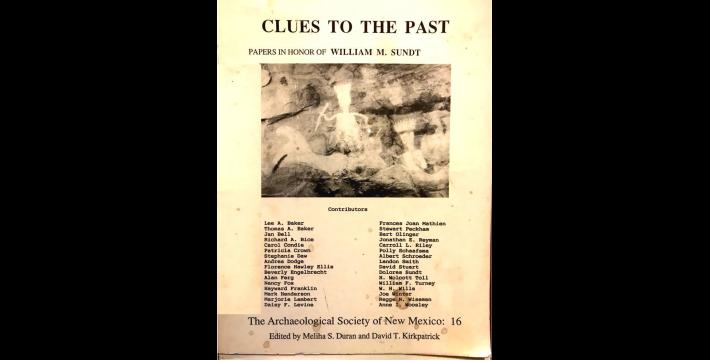
Clues to the Past, Papers in Honor of William M. Sundt
1990 by the Archaeological Society of New Mexico
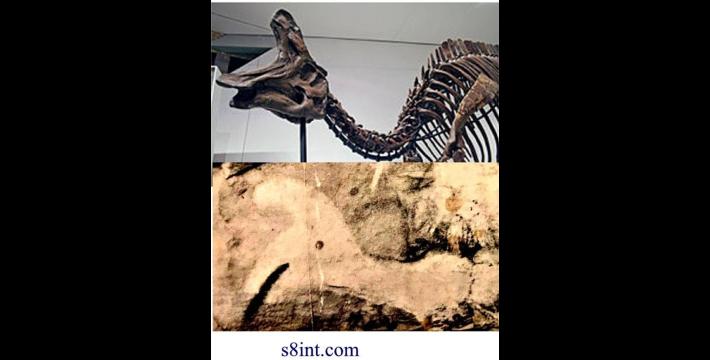
I came across this book years ago in a used bookstore. Did the Pueblo People encounter animals that supposedly became extinct over 70 million years ago? s8intcom
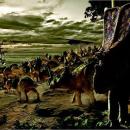
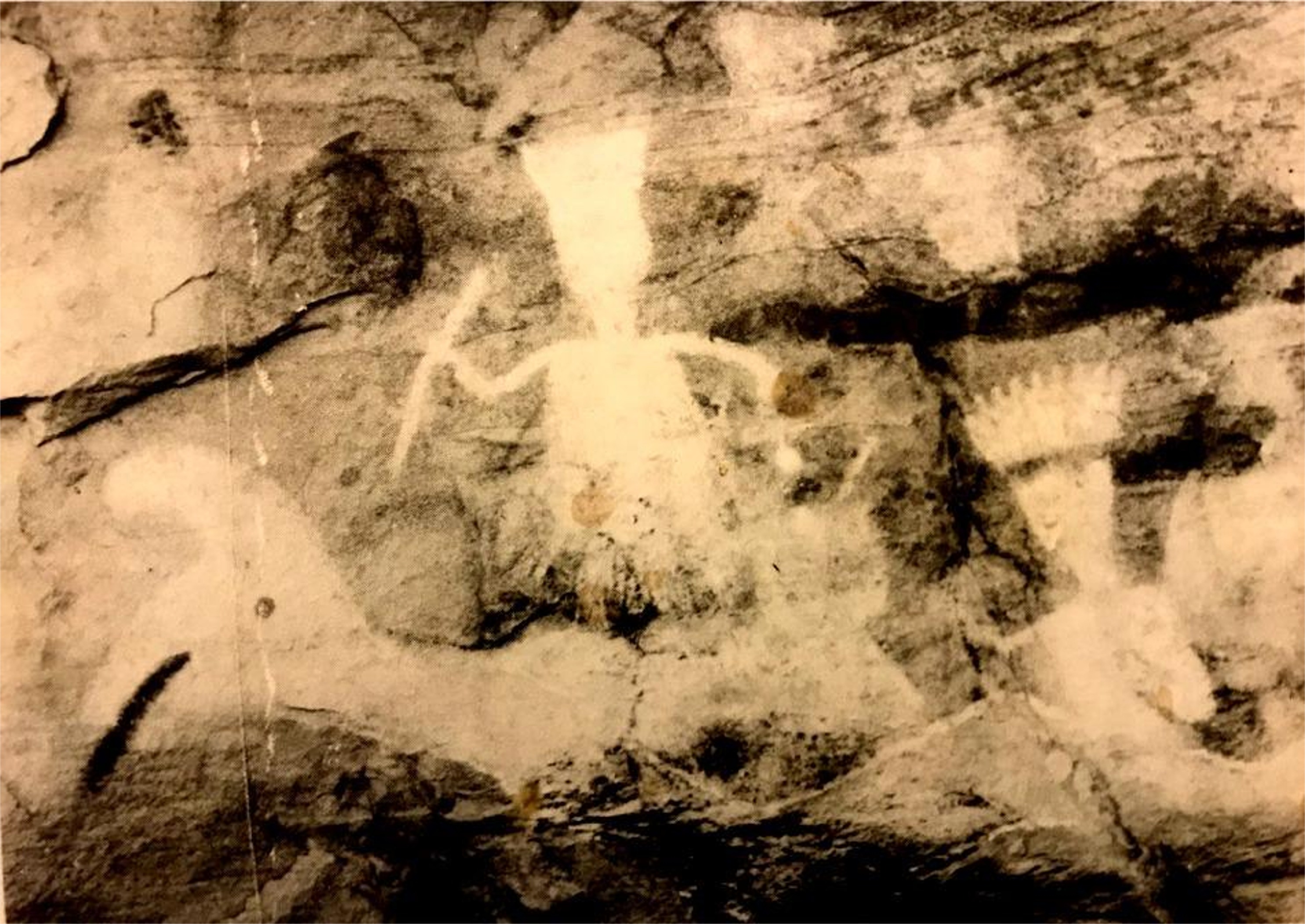
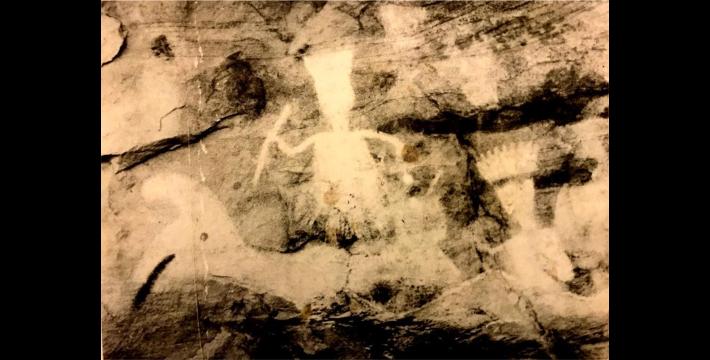
Cover: The Pine Tree Site.
“The Pine Tree site consists of two painted rock shelters in close proximity in the Galisteo Basin. The paintings are in the Pueblo IV Rio Grande style and include figures of horned serpents, various ceremonial personages, faces or masks, and a shield…..
On the basis of the iconography and site situation, the lower shelter is tentatively identified as a shrine to Masau’u. The Pine Tree site is viewed as one of many shrine locations associated with a major Galisteo Basin pueblo ruin.”
“The painting in this shelter is dominated by two simple but large horned serpents almost a meter in length. One is painted on the ceiling in yellow, ochre colored clay and the other, white and larger, is on the wall below, along with various other figures.
The white serpent is given emphasis by a red eye and a red protruding tongue, and the horn is distinctive in its bluntness”. Polly Schaafsma. Photos by Schaafsma.
The Galisteo Basin Pueblo Peoples
“ While people have moved through and lived in the basin for thousands of years, for a relatively brief period in the thirteenth through sixteenth centuries there was a great influx of Pueblo peoples culminating in a series of large pueblos, some of which were occupied at the time of the arrival of the first Europeans in the mid 1500s. For archaeologists and much of the public, these super pueblos define the Galisteo Basin…”
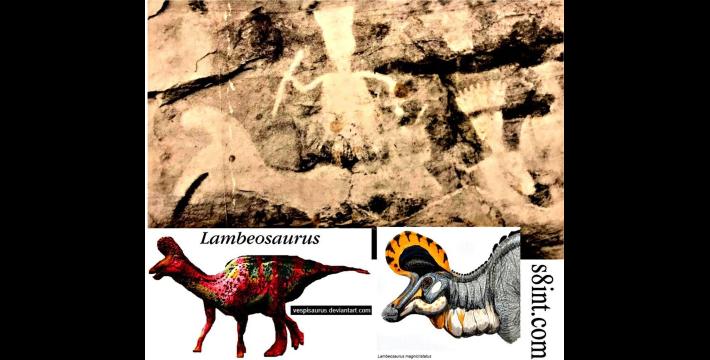
Lambeosaurus
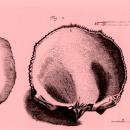
Lambeosaurus (/ˌlæmbioʊˈsɔːrəs/ LAM-bee-o-SAWR-əs; meaning "Lambe's lizard") is a genus of hadrosaurid dinosaur that lived about 75 million years ago, in the Late Cretaceous period (Campanian) of North America. This bipedal/quadrupedal, herbivorous dinosaur is known for its distinctive hollow cranial crest, which in the best-known species resembled a hatchet.
Several possible species have been named, from Canada, the United States, and Mexico, but only the two Canadian species are currently recognized as valid.
Lambeosaurus was belatedly described in 1923 by William Parks, over twenty years after the first material was studied by Lawrence Lambe. Wikipedia
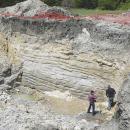
Sullivan, R., Jasinsky, S.E., Guenther, M. and Lucas, S.G. (2009). "The first lambeosaurine (Dinosauria, Hadrosauridae, Lambeosaurinae) from the Upper Cretaceous Ojo Alamo Formation (Naashoibito Member), San Juan Basin, New Mexico" (PDF). New Mexico Museum of Natural History and Science Bulletin
FAIR-USE COPYRIGHT DISCLAIMER: Copyright Disclaimer Under Section 107 of the Copyright Act 1976, allowance is made for "fair use" for purposes such as criticism, commenting, news reporting, teaching, scholarship, and research. Fair use is a use permitted by copyright statute that might otherwise be infringing. Non-profit, educational or personal use tips the balance in favor of fair use.
Please Support the Research of S8int.com!
Support S8int.com with a PayPal Donation!
More Posts About Featured